

The history of incense stretches back thousands of years, playing a significant role in the rituals, spirituality, and daily lives of many cultures across the globe. From the burning temples of ancient Egypt to the fragrant courts of Arabia, incense has been a universal symbol of purification, luxury, and devotion. Among the many varieties of incense, Arabian bakhoor holds a unique place—steeped in rich history, intricate craftsmanship, and an unmistakable scent profile. This blog explores the fascinating journey of incense and bakhoor, tracing its origins, uses, and evolution through the ages.
Incense has been used for millennia, with its origins believed to date back to ancient Mesopotamia around 3,500 BCE. The earliest known uses of incense were for religious and ceremonial purposes, with offerings to deities seen as a way to communicate with the divine. The word “incense” itself comes from the Latin word incendere, meaning “to burn.”
The use of fragrant woods, resins, and spices was quickly adopted by ancient Egyptians, Greeks, Romans, and Persians. In Egypt, incense became an essential part of daily life, used for embalming rituals, honoring gods, and purifying homes. The Egyptians often burned kyphi, a blend of 16 ingredients including honey, wine, and frankincense, believed to invoke dreams and induce healing.
However, it was in the Arabian Peninsula, at the crossroads of spice and trade routes, that incense began to thrive as a luxurious and valuable commodity.
Arabian bakhoor refers to wood chips soaked in fragrant oils, which are then burned to release their aromatic smoke. Bakhoor, and other forms of Arabian incense, have their roots in the Arabian Peninsula’s ancient history, particularly in the regions that are now Oman, Yemen, and southern Saudi Arabia. These areas were rich in frankincense and myrrh, two of the most prized ingredients in the incense trade.
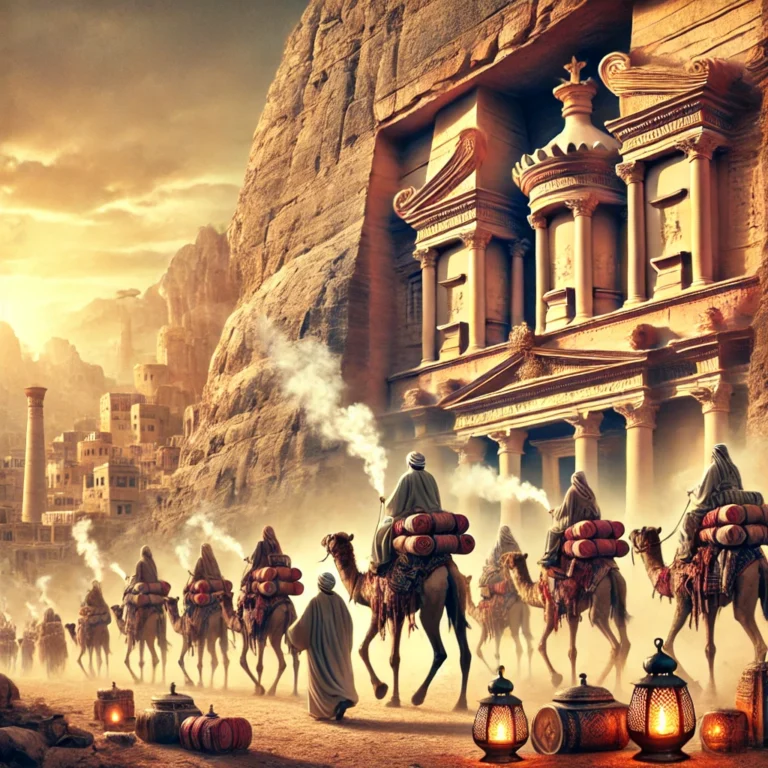
Frankincense, sourced from the Boswellia tree, was harvested in Oman and traded across the Middle East and North Africa (MENA) region. Myrrh, a resin from the Commiphora tree, was similarly valued for its rich, earthy scent and medicinal properties. The Arabian incense trade became so valuable that it formed the backbone of what is known as the Incense Route, which linked Arabia to the Mediterranean, India, and beyond. By 1,500 BCE, this trade was booming, with vast caravans transporting incense to places as far as Egypt and Rome.
In the ancient world, incense wasn’t just a tool for scent; it was deeply tied to the social and religious fabric of these civilizations:
The use of bakhoor flourished during the Islamic Golden Age (8th to 13th centuries), when the Arab world became a hub of culture, trade, and scientific advancement. During this period, perfumery and the art of creating incense reached new heights, thanks to the work of scholars like Al-Kindi, an Arab philosopher who is often considered the “father of perfumery.” His work in distillation and fragrance-making led to the refinement of bakhoor into a luxurious, artisanal product.
Bakhoor’s role during this time extended beyond religion and entered the realm of personal hygiene and social gatherings. It became a symbol of refinement, with households using it to scent clothing, furniture, and hair. This tradition remains strong in the Arabian Gulf today, where bakhoor is a central part of cultural practices, particularly in celebrations, weddings, and daily life.
While bakhoor has remained a beloved tradition in the Arab world, its influence has spread globally, particularly in the last century. The luxury fragrance market has embraced Arabian incense, with modern perfumers often drawing inspiration from traditional bakhoor blends. As consumers become more conscious of well-being and seek out products that enhance relaxation and home environments, bakhoor is increasingly seen as a premium home fragrance with both cultural depth and aromatic allure.
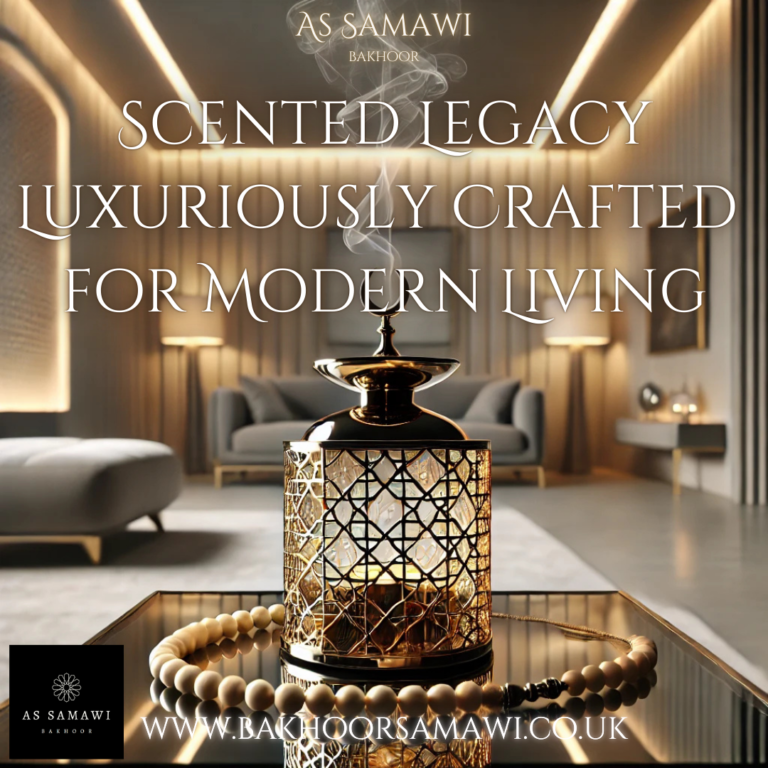
Today, bakhoor has evolved to meet the needs of a modern, global audience. While traditional methods of burning bakhoor over charcoal remain popular in Arab households, innovations like electric bakhoor burners and luxury bakhoor diffusers have made it more accessible to non-Middle Eastern consumers. This evolution allows bakhoor to appeal to a wider market, particularly among wellness enthusiasts and those seeking natural home fragrances that connect them to history.
The timelessness of bakhoor lies in its ability to blend the past with the present. Whether it is being used to elevate a modern home, set the mood for meditation, or simply as a luxurious scent to enjoy, bakhoor carries with it centuries of tradition, craftsmanship, and cultural significance.
The journey of incense and bakhoor is one of tradition, luxury, and spirituality. From the incense routes of ancient Arabia to the modern fragrance world, bakhoor has remained a cherished symbol of elegance and refinement. Its origins in the Arabian Peninsula, the spiritual and social significance it held in ancient cultures, and its continued popularity today reflect its deep cultural roots and enduring appeal.
As bakhoor makes its way into homes around the world, it brings with it not just the allure of a beautiful scent, but the echoes of history, inviting everyone who experiences it to take part in an ancient, sensory-rich tradition.
Lorem ipsum dolor sit amet consec contes quisque urna molestie tincidunt aliquet quam. Imperdiet at pellent esque vitae aliquet tempor eget rutrum tellus.